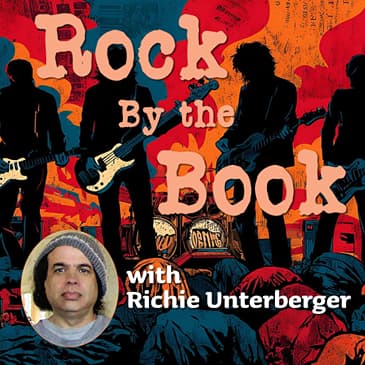


It's possible, even probable, that no one has the depth of knowledge about rock 'n' roll history that Richie Unterberger has. His 40+ year career, starting as a DJ in college to writing 15 books, countless reviews and articles, has focused on the music of the 60s and 70s. This episode focuses on his new books about the Velvet Underground and The Who and looks back at how rock music has changed over the decades.
As a DJ at the University of Pennsylvania’s FM station, WXPN, Richie Unterberger delved into the roots of rock and folk music. It became his passion.
“I can play guitar and piano, but not very well,” he admits. “I realized pretty early on my main strength was going to be as a writer.”
That’s an understatement, looking at his body of work–fifteen books, countless magazine articles, reviews, commentaries and lectures over a career spanning more than 40 years. Throw out the name of a musician or band from the 60s, 70s and beyond, and Richie’s encyclopedic mind will recall chapter and verse–The Beatles, The Rolling Stones, The Who, Janis Joplin, Elvis Presley, Jimi Hendrix, The Byrds–are just some of the artists he’s written and lectured about. You can find it all at richieunterberger.com.
His latest book, Do What You Fear Most: The History of the Velvet Underground, is an 800-page epic that covers every detail of the group’s members, including leader Lou Reed, the origins of their songs, the labels, the sound engineers, their association with Andy Warhol, and more. Even if you were never a fan, you might become one by immersing yourself in Richie’s book.
“Because I’ve been a fan [of the Velvet Underground] since 1979, I already accumulated a lot of the basic research. I wasn’t starting from scratch. I was reading as much as I could about them. So, I dug through microfilm and collections of vintage magazines. I did a lot of things simultaneously. It’s not hard to find the four principal studio albums and the two live albums that came out, but there’s a lot of unreleased material that really illuminates the group.”
Also released this spring is an e-book version of Won’t Get Fooled Again: The Who from Lifehouse to Quadrophenia. Picking up after the success of the rock opera “Tommy”, this is the story of band leader Pete Townshend’s quest to create another rock opera, “Lifehouse”, and the complications that prevented it from ever being created, and then the success of “Quadrophenia,” which benefited from a much simpler concept.
I was absolutely privileged to speak with Richie, who I consider one of the greatest rock historians of our time, in this edition of Type. Tune. Tint. Watch or listen now!
00:00:00 --> 00:00:04 Queen Carvania stood haloed by the morning sun.
00:00:05 --> 00:00:09 An army hung on her every word. My champions,
00:00:09 --> 00:00:14 I have sold my chariot on Carvana. It was a lovely
00:00:14 --> 00:00:18 SUV, an inexplicably queenly offer. They're even
00:00:18 --> 00:00:21 coming to the castle to collect it. Tonight,
00:00:21 --> 00:00:26 we feast! An offer you can feast on. Sell your
00:00:26 --> 00:00:29 car today on Carvana. Pick up fees may apply.
00:00:34 --> 00:00:38 Welcome to TypeTune Tint. I'm Tom Kranz. Some
00:00:38 --> 00:00:41 of the greatest rock and roll musicians of all
00:00:41 --> 00:00:44 time have been subjects of books, reviews, and
00:00:44 --> 00:00:47 articles by today's guest. Richie Unterberger
00:00:47 --> 00:00:49 has written about music since he began reviewing
00:00:49 --> 00:00:52 records in college. More than 40 years later,
00:00:52 --> 00:00:54 he's become one of our most knowledgeable authorities
00:00:54 --> 00:00:57 on rock music. The musicians, the history, the
00:00:57 --> 00:01:00 trends, and the troubles are documented in a
00:01:00 --> 00:01:03 dozen books, endless reviews, liner notes, and
00:01:03 --> 00:01:06 articles. Today we hear about his latest work,
00:01:06 --> 00:01:08 a history of Lou Reed and the Velvet Underground,
00:01:08 --> 00:01:11 his e -book about my favorite group, The Who,
00:01:11 --> 00:01:14 and the broader topic of rock music's evolution
00:01:14 --> 00:01:21 over the last four decades. And I'm joined by
00:01:21 --> 00:01:24 Richie Unterberger from his palatial estate in
00:01:24 --> 00:01:28 the San Francisco Bay Area, where he's been living
00:01:28 --> 00:01:30 for a long time. And I was drawn to Richie for
00:01:30 --> 00:01:34 two reasons. Reason number one is that he and
00:01:34 --> 00:01:36 my wife went to high school together in beautiful
00:01:36 --> 00:01:39 Lower Merion Township. which is just outside
00:01:39 --> 00:01:42 Philadelphia. You know, and Richie, she told
00:01:42 --> 00:01:44 me, you know, a long time ago, you ought to look
00:01:44 --> 00:01:46 up Richie and talk to him. He's got, you know,
00:01:46 --> 00:01:49 he's got this long history of writing about music.
00:01:49 --> 00:01:51 And I finally got off my ass and did it when
00:01:51 --> 00:01:55 I looked up the book about The Who and then the
00:01:55 --> 00:01:58 Velvet Underground book. But folks, Richie is,
00:01:58 --> 00:02:02 and this is a really... Short description for
00:02:02 --> 00:02:04 a second line on the super. But let's, for the
00:02:04 --> 00:02:07 purposes of this interview, call Richie a rock
00:02:07 --> 00:02:11 historian and author. But that's such a simplified
00:02:11 --> 00:02:14 description when you see the actual volume of
00:02:14 --> 00:02:17 work at RichieUnterberger .com. Richie, first
00:02:17 --> 00:02:19 of all, thanks for being with me. And what's
00:02:19 --> 00:02:22 the weather like in the San Francisco Bay Area
00:02:22 --> 00:02:24 today? Is it cloudy and shitty like it is here?
00:02:25 --> 00:02:29 It's cloudy, but it is not nearly as hot as it
00:02:29 --> 00:02:32 is in most of the rest of the country. It's maybe
00:02:32 --> 00:02:34 60 degrees right now. It'll probably get up to
00:02:34 --> 00:02:38 around the early 70s. But if you've been to the
00:02:38 --> 00:02:41 Bay Area, you know that the weather is very different
00:02:41 --> 00:02:43 according to where you are, even within a 15
00:02:43 --> 00:02:46 -mile radius. Absolutely. Yeah. And so you're
00:02:46 --> 00:02:49 a Bay Area guy. How long have you lived out there?
00:02:50 --> 00:02:56 For more than 40 years. Moved here in 1983. I
00:02:56 --> 00:02:58 did spend three and a half years in Los Angeles
00:02:58 --> 00:03:01 in the 80s. But besides that time, I've been
00:03:01 --> 00:03:05 in the Bay Area all of those 40 plus years. Gotcha.
00:03:05 --> 00:03:10 So. Just to introduce myself to what you've been
00:03:10 --> 00:03:13 doing, I'm going to just say Richie's website
00:03:13 --> 00:03:15 a couple of times here, folks. RichieUnterberger
00:03:15 --> 00:03:18 .com. I'm going to put it up on the screen, too.
00:03:19 --> 00:03:21 Everything that he has done is one way or the
00:03:21 --> 00:03:24 other represented on that website. But you have
00:03:24 --> 00:03:28 written 15 books, eight or nine of them, seven,
00:03:28 --> 00:03:31 eight or nine of them about music, specifically
00:03:31 --> 00:03:36 music of the 60s and 70s. You teach at a bunch
00:03:36 --> 00:03:42 of different schools and kind of continuing learning
00:03:42 --> 00:03:47 venues in the San Francisco area. You've written
00:03:47 --> 00:03:51 countless record reviews, book reviews. I'm guessing
00:03:51 --> 00:03:53 you've written some liner notes. You've written
00:03:53 --> 00:03:56 for online magazines, offline magazines. It's
00:03:56 --> 00:03:59 my impression that you are probably one of the
00:03:59 --> 00:04:03 greatest living repositories of rock music, music
00:04:03 --> 00:04:07 knowledge in general. And just the first book
00:04:07 --> 00:04:10 we're going to touch on, which is the book that
00:04:10 --> 00:04:13 is your most recent that's out right now, Do
00:04:13 --> 00:04:16 What You Fear Most, The History of the Velvet
00:04:16 --> 00:04:18 Underground. Velvet Underground was a big band
00:04:18 --> 00:04:21 in the 60s and early 70s. Lou Reed was their
00:04:21 --> 00:04:25 leader, and he broke off and became kind of...
00:04:25 --> 00:04:28 I finally achieved his lifelong dream of being
00:04:28 --> 00:04:32 a rock star. This is an 800 -page book. The bibliography
00:04:32 --> 00:04:35 itself is 11 pages of single -spaced entries.
00:04:35 --> 00:04:39 So as a writer myself, I am absolutely fascinated
00:04:39 --> 00:04:42 and bowled over by the amount of work that must
00:04:42 --> 00:04:44 have gone into this book. I mean, the details,
00:04:44 --> 00:04:47 it's not just the history of the musicians and
00:04:47 --> 00:04:50 how the bands came together. It's where they
00:04:50 --> 00:04:52 recorded, what they recorded, the instruments
00:04:52 --> 00:04:54 they used, the individuals who were at the recording
00:04:54 --> 00:04:57 sessions, stuff going on in the background. I
00:04:57 --> 00:04:58 mean, the only thing you don't have is the brand
00:04:58 --> 00:05:00 of paper towels that they wipe their hands with
00:05:00 --> 00:05:03 after they washed up. And you probably know that,
00:05:03 --> 00:05:07 too. Tell me, first of all, where you got the
00:05:07 --> 00:05:10 interest in writing, first of all, and then writing
00:05:10 --> 00:05:15 about music specifically. It was in college,
00:05:15 --> 00:05:19 which is the University of Pennsylvania. on the
00:05:19 --> 00:05:22 campus radio station, WXPN. You're probably familiar
00:05:22 --> 00:05:27 with that. And they had a huge music library.
00:05:27 --> 00:05:30 It was all vinyl back in those days, the early
00:05:30 --> 00:05:34 1980s when I joined the station. And I was a
00:05:34 --> 00:05:38 programmer for a couple of years. I was already
00:05:38 --> 00:05:42 a huge music fan and had a good number of records.
00:05:43 --> 00:05:46 But I hadn't written about music, although I
00:05:46 --> 00:05:48 was on my high school paper writing about other
00:05:48 --> 00:05:51 things. So you started with kind of a journalist's
00:05:51 --> 00:05:55 approach to writing. Is that fair? The first
00:05:55 --> 00:05:58 writing that I did professionally was record
00:05:58 --> 00:06:01 reviews. Okay. More basic, of course, than doing
00:06:01 --> 00:06:06 full -length books. But I was steered toward
00:06:06 --> 00:06:10 a magazine that specialized in independent, really
00:06:10 --> 00:06:13 released music. Most of it was... of the underground
00:06:13 --> 00:06:16 type and that magazine's been gone for a long
00:06:16 --> 00:06:21 time but it gave me a lot of experience in succinctly
00:06:21 --> 00:06:24 expressing what was really interesting or not
00:06:24 --> 00:06:27 interesting about a piece of music. Then I became
00:06:27 --> 00:06:31 an editor of a similar magazine for six years
00:06:31 --> 00:06:35 and did a good amount of writing for that but
00:06:35 --> 00:06:39 what got me interested in writing books was that
00:06:40 --> 00:06:43 I wrote a lot of reviews for a site called the
00:06:43 --> 00:06:47 All Music Guide. And they also had some guidebooks.
00:06:47 --> 00:06:49 And the publisher of that guidebook, because
00:06:49 --> 00:06:51 I did a lot of writing and some editing for that,
00:06:51 --> 00:06:55 said, have you thought about writing full -length
00:06:55 --> 00:06:59 books? And that is when I started work on my
00:06:59 --> 00:07:02 first book, which gave me the opportunity to
00:07:02 --> 00:07:05 do a lot more interviews than I'd done previously,
00:07:05 --> 00:07:07 where I was usually just writing about records.
00:07:08 --> 00:07:10 And that, to me, is about the most interesting
00:07:10 --> 00:07:14 part of the process. So interviewing the principals,
00:07:14 --> 00:07:15 you're talking about the musicians and the people
00:07:15 --> 00:07:18 who actually make the music. Yeah, and the producers
00:07:18 --> 00:07:21 and the promoters and people associated with
00:07:21 --> 00:07:24 them. So your interest in music was actually
00:07:24 --> 00:07:26 spurred in college while you were working at
00:07:26 --> 00:07:30 a radio station. It actually dates back to 1967.
00:07:31 --> 00:07:35 Okay. I'm 64 years old, but that was the year
00:07:35 --> 00:07:38 in the holidays. So you were like, what, six
00:07:38 --> 00:07:43 or seven years old? Five, actually. And I already
00:07:43 --> 00:07:46 liked the Beatles, and I heard some rock music
00:07:46 --> 00:07:48 around the house because I have three older brothers.
00:07:48 --> 00:07:55 And as a holiday present, my parents gave me
00:07:55 --> 00:07:57 and a brother, the one I was sharing a room with,
00:07:57 --> 00:08:02 a clock radio. So we were able to listen to AM
00:08:02 --> 00:08:06 radio. It was only an AM radio. all the time,
00:08:06 --> 00:08:07 including when we were going to sleep. So I do
00:08:07 --> 00:08:10 have firsthand memories of a lot of the top 40
00:08:10 --> 00:08:12 singles from that time, but also some of the
00:08:12 --> 00:08:15 albums because my oldest brother was a big fan
00:08:15 --> 00:08:18 already of Cream and Jimi Hendrix and The Who
00:08:18 --> 00:08:21 and saw those acts when he was a teenager. And
00:08:21 --> 00:08:25 I was a huge Beatles fan from around the time
00:08:25 --> 00:08:28 they broke up. It wasn't great timing. From that
00:08:28 --> 00:08:30 point onward. And by the time I was in sixth
00:08:30 --> 00:08:32 grade, I had gotten all the Beatles records that
00:08:32 --> 00:08:34 I could. But I branched out from that into the
00:08:34 --> 00:08:37 Beach Boys and the Rolling Stones and then the
00:08:37 --> 00:08:40 Kinks and Jefferson Airplane. And although I
00:08:40 --> 00:08:43 wasn't experiencing that 60s music directly,
00:08:43 --> 00:08:46 that's always been my favorite music. I see why.
00:08:46 --> 00:08:49 Yeah. I, so I have, my earliest memories are
00:08:49 --> 00:08:53 of getting my very first portable AM radio, which
00:08:53 --> 00:08:55 I used to walk around up to my, holding it up
00:08:55 --> 00:08:58 to my ear and listening to Wibbage, W -I -B -G,
00:08:58 --> 00:09:00 you remember those guys, right? And I even went
00:09:00 --> 00:09:03 and when those guys did personal appearances,
00:09:03 --> 00:09:05 High Lit and Joe Niagara and Frank X Feller.
00:09:06 --> 00:09:08 I remember going to a personal appearance at
00:09:08 --> 00:09:10 Sears and they had a band there called the Kit
00:09:10 --> 00:09:12 Kats, which was a Philadelphia band. I'm sure
00:09:12 --> 00:09:14 you've heard of them. I never heard of them after
00:09:14 --> 00:09:16 I saw them that time. But yeah, I mean, I was
00:09:16 --> 00:09:20 introduced to popular music really by AM radio.
00:09:21 --> 00:09:26 You know, my first singles that I got were. a
00:09:26 --> 00:09:28 four seasons tune called come on, Marianne. My
00:09:28 --> 00:09:32 mother bought a song for me called Tommy, which
00:09:32 --> 00:09:34 was by a group called Reparata and the Delrons.
00:09:34 --> 00:09:36 Have you heard of them? I bet you, you have.
00:09:36 --> 00:09:47 Yeah. So these are my earliest memories. And
00:09:47 --> 00:09:49 then that kind of, you know, I, I never stopped
00:09:49 --> 00:09:51 liking music. And then I started playing the
00:09:51 --> 00:09:53 drums. Did you ever play an instrument by the
00:09:53 --> 00:09:56 way? I can play guitar and piano, but not very
00:09:56 --> 00:09:58 well, and I never played professionally. I realized
00:09:58 --> 00:10:01 pretty early on my main strength was going to
00:10:01 --> 00:10:04 be as a writer. So you also teach, and you told
00:10:04 --> 00:10:06 me that you teach at, like, what, a dozen different
00:10:06 --> 00:10:09 places? What kind of courses do you teach? It's
00:10:09 --> 00:10:12 a long list by now. It's almost 20 of them. But
00:10:12 --> 00:10:14 I've done courses on The Beatles and The Rolling
00:10:14 --> 00:10:17 Stones, The Who, Janis Joplin, Jimi Hendrix,
00:10:17 --> 00:10:22 early punk and new wave, 1960s folk rock. San
00:10:22 --> 00:10:27 Francisco, 1960s rock. Early Elvis Presley, rock
00:10:27 --> 00:10:30 and roll's first decade. The one course I've
00:10:30 --> 00:10:33 done, which isn't music, I wrote the text and
00:10:33 --> 00:10:35 did photo research for a big coffee table book
00:10:35 --> 00:10:39 on San Francisco photos throughout history. Oh,
00:10:39 --> 00:10:41 yeah, you mentioned that on your website, yeah.
00:10:41 --> 00:10:45 Yeah. And they are all non -credit adult education
00:10:45 --> 00:10:48 courses, but that's kind of cool because I don't
00:10:48 --> 00:10:50 have the great papers. Well, plus people show
00:10:50 --> 00:10:52 up to those courses because they really want
00:10:52 --> 00:10:54 to show up and they really want to learn about
00:10:54 --> 00:10:56 the subject matter, right? So you've got students
00:10:56 --> 00:10:59 who are already engaged, more or less. Yeah.
00:11:00 --> 00:11:03 And the program, it's nationwide, Osher Lifelong
00:11:03 --> 00:11:06 Learning Institute. That's where two -thirds
00:11:06 --> 00:11:09 of the places where I teach, they're part of
00:11:09 --> 00:11:12 that program. That's a nationwide program. You
00:11:12 --> 00:11:18 refer to it as OLLI, right? Yeah, Osher is the...
00:11:19 --> 00:11:21 guy bernard osher the humanitarian who founded
00:11:21 --> 00:11:24 that okay Gotcha. All right. So let's talk a
00:11:24 --> 00:11:26 little bit about the Velvet Underground book.
00:11:26 --> 00:11:28 So, you know, in the interest of full transparency,
00:11:29 --> 00:11:32 I was never, during that time, I was not a Velvet
00:11:32 --> 00:11:35 Underground fan. I didn't really, I was stuck
00:11:35 --> 00:11:40 kind of in a Monkees, Royal Guardsmen, Tijuana
00:11:40 --> 00:11:43 Brass. I was Beatles. I was not into anything
00:11:43 --> 00:11:46 that would even be remotely called like underground
00:11:46 --> 00:11:48 or alternative music, which those guys were.
00:11:49 --> 00:11:53 But this book. It got me engaged for a couple
00:11:53 --> 00:11:55 of reasons. Reason number one is all four of
00:11:55 --> 00:11:58 the members of that group, but especially Lou
00:11:58 --> 00:12:00 Reed and John Cale had such interesting backgrounds.
00:12:00 --> 00:12:02 You know, John Cale was a... I mean, he could
00:12:02 --> 00:12:04 have played in a symphony orchestra if he wanted
00:12:04 --> 00:12:07 to, I guess. And Lou Reed, you know, what I learned
00:12:07 --> 00:12:10 about him that shocked me was, you know, his
00:12:10 --> 00:12:11 parents put him through electroshock therapy
00:12:11 --> 00:12:15 as a kid. You know, initially, it sounded like
00:12:15 --> 00:12:16 they were trying to, like, shock the gayness
00:12:16 --> 00:12:18 out of him. But I don't know if that was really
00:12:18 --> 00:12:22 the reason why. But that ended up actually influencing
00:12:22 --> 00:12:26 him somewhat, didn't it? Yeah. And I didn't want
00:12:26 --> 00:12:30 to overstate that in the book and make it. sensational
00:12:30 --> 00:12:32 but I think it contributed to his feeling of
00:12:32 --> 00:12:35 being an outsider and wanting to document the
00:12:35 --> 00:12:39 experiences not just the bisexuality but the
00:12:39 --> 00:12:44 drug use and the street life of Manhattan in
00:12:44 --> 00:12:48 popular music which he had experienced in the
00:12:48 --> 00:12:51 theater and in novels and films he didn't see
00:12:51 --> 00:12:54 a reason why those subjects could not be addressed
00:12:54 --> 00:12:58 in rock music and It's interesting that he teamed
00:12:58 --> 00:13:02 up with John Cale. The principal figures of the
00:13:02 --> 00:13:05 Velvet Underground to begin with, I can't think
00:13:05 --> 00:13:08 of any other group where the three most famous
00:13:08 --> 00:13:10 members came from such different backgrounds.
00:13:10 --> 00:13:13 No kidding. Lou Reed's a rock and roll fan, also
00:13:13 --> 00:13:16 a beat literature fan from Long Island. John
00:13:16 --> 00:13:19 Cale from Wales, and as you mentioned, classically
00:13:19 --> 00:13:22 trained. And Nico, who sings on the first album.
00:13:23 --> 00:13:26 from Germany and a model and an actress with
00:13:26 --> 00:13:30 barely any professional experience as a vocalist.
00:13:30 --> 00:13:33 But it worked when it came together. Yeah, and
00:13:33 --> 00:13:35 let me, as a former lapsed drummer, let me just
00:13:35 --> 00:13:40 mention Maureen Tucker, who played a really unorthodox
00:13:40 --> 00:13:43 drum set. I mean, she played with the bass on
00:13:43 --> 00:13:46 its side, and she basically played it with a
00:13:46 --> 00:13:48 beater, not really traditional drumsticks. So
00:13:48 --> 00:13:52 she played a lot of bass and snare. Very little
00:13:52 --> 00:13:55 symbol. A lot of her playing was kind of timekeeping.
00:13:55 --> 00:13:58 But, you know, she was one of the rocks of the
00:13:58 --> 00:14:01 group in terms of, you know, common sense and
00:14:01 --> 00:14:03 kind of keeping things grounded, right? Would
00:14:03 --> 00:14:06 you say that's correct? Yeah. Another unusual
00:14:06 --> 00:14:09 thing about her style, she played standing up.
00:14:09 --> 00:14:13 Right. Which you still seldom see in rock bands.
00:14:13 --> 00:14:15 But one of the interesting observations I got
00:14:15 --> 00:14:18 from an interview with Doug Yule, who replaced
00:14:18 --> 00:14:20 John Cale. Yeah. for the last two really good
00:14:20 --> 00:14:23 albums that they did. On their last album, Maureen
00:14:23 --> 00:14:25 Tucker doesn't play because she was pregnant.
00:14:26 --> 00:14:30 And he said, doing it over, that was a really
00:14:30 --> 00:14:33 bad mistake. If I could do it over, we should
00:14:33 --> 00:14:35 have waited until she was ready. Not just because
00:14:35 --> 00:14:39 we really benefited from her drum sound, but...
00:14:39 --> 00:14:42 She was sort of a peacemaker. She was the only
00:14:42 --> 00:14:44 one who could talk to Lou Reed and cool him out
00:14:44 --> 00:14:46 and make the group get along better. And the
00:14:46 --> 00:14:49 group did break up really shortly after recording
00:14:49 --> 00:14:53 that album in 1970, Loaded. Yeah. And then they
00:14:53 --> 00:14:56 got together briefly for a reunion tour back
00:14:56 --> 00:15:00 in 1993. And I only know that because I was working
00:15:00 --> 00:15:05 at CBS at the time. Our London bureau actually
00:15:05 --> 00:15:08 caught up with those, with those guys. I think
00:15:08 --> 00:15:13 musicians play their entire lives. How, how,
00:15:13 --> 00:15:18 how long did Horowitz go? She's gone 90. Right.
00:15:19 --> 00:15:22 So we anticipate a run till about 90. It's not
00:15:22 --> 00:15:24 like they made a whole ton of money. You know,
00:15:24 --> 00:15:28 they did sell, they sold records. But it's, I
00:15:28 --> 00:15:29 guess, because of the way the music industry
00:15:29 --> 00:15:32 was at the time, it seems like all the managers
00:15:32 --> 00:15:34 and the producers made the money and they made
00:15:34 --> 00:15:37 very little. They actually did not sell too many
00:15:37 --> 00:15:40 records, although they sold more than the legend
00:15:40 --> 00:15:43 often has it. The highest chart position they
00:15:43 --> 00:15:48 had on Billboard was number 171 out of 200. Yeah,
00:15:48 --> 00:15:50 but did you have to sell like, you know, tens
00:15:50 --> 00:15:53 of thousands of records to get there or no? Yes,
00:15:53 --> 00:15:56 you do. And their first album, which is their
00:15:56 --> 00:16:00 most well -known one, I did get a look at a royalty
00:16:00 --> 00:16:02 statement. In the first couple of years, it sold
00:16:02 --> 00:16:05 about 60 records. And that's not too bad,
00:16:05 --> 00:16:08 but that's not close to the level of the Beatles
00:16:08 --> 00:16:10 and the Stones and the Beach Boys and the Supremes.
00:16:11 --> 00:16:13 And their managers, I don't think they were so
00:16:13 --> 00:16:17 much crooked as it was really hard to... expose
00:16:17 --> 00:16:20 a group on a big level that was doing such underground
00:16:20 --> 00:16:23 and unconventional music. They didn't even get
00:16:23 --> 00:16:26 a ton of airplay on FM radio when that emerged.
00:16:27 --> 00:16:30 Jimi Hendrix sold a ton of records without having
00:16:30 --> 00:16:34 huge hit singles, but they weren't able to do
00:16:34 --> 00:16:36 that. And The Who did it with Tommy. They had
00:16:36 --> 00:16:38 some hit singles, but they were really more of
00:16:38 --> 00:16:44 an album band. It took, in my view, decades for
00:16:44 --> 00:16:46 the Velvet Underground to find the audience that
00:16:46 --> 00:16:49 they really deserved. And that happens sometimes,
00:16:49 --> 00:16:52 not just with rock bands. Vincent Van Gogh is
00:16:52 --> 00:16:56 the most obvious answer from the general world
00:16:56 --> 00:16:59 of the arts. But I think the music was too good
00:16:59 --> 00:17:03 to remain underground. It's a shame for the original
00:17:03 --> 00:17:05 musicians that they didn't get that sort of recognition
00:17:05 --> 00:17:07 when they were active at their peak. But they
00:17:07 --> 00:17:11 got it much more so after the fact, right? Yeah,
00:17:11 --> 00:17:13 definitely. It took a long time for people to
00:17:13 --> 00:17:15 kind of discover them, and I think a lot of that
00:17:15 --> 00:17:17 may have had to do with the fact that Lou Reed
00:17:17 --> 00:17:20 became a star, right? Yeah, and on the Rock and
00:17:20 --> 00:17:23 Roll Animal Live album, which was pretty popular.
00:17:23 --> 00:17:25 It got FM airplay when I started to listen to
00:17:25 --> 00:17:31 FM radio, and that's like 1974, 1975. He deliberately
00:17:31 --> 00:17:34 included... versions of Velvet Underground songs
00:17:34 --> 00:17:36 and he has said it was because I wanted people
00:17:36 --> 00:17:39 to know about those songs and that I wrote them
00:17:39 --> 00:17:41 because a lot of people didn't catch them on
00:17:41 --> 00:17:44 the original Velvet Underground albums. The original
00:17:44 --> 00:17:46 Velvet Underground versions in my opinion are
00:17:46 --> 00:17:49 a lot better but it did certainly lead a lot
00:17:49 --> 00:17:53 of people back to those original records. Evening
00:17:53 --> 00:17:57 by his remorse. Buy a new car? I'll be moving
00:17:57 --> 00:18:00 in. Let's get started. Sorry, I think there's
00:18:00 --> 00:18:03 been a mistake. I bought it from Carvana. You
00:18:03 --> 00:18:05 what? Yeah, great price. I even have seven days
00:18:05 --> 00:18:08 to love it or return it. So there's no... No,
00:18:08 --> 00:18:10 no buyer's remorse. More like buyer's rejoice.
00:18:11 --> 00:18:15 I guess I'll let myself out. Congratulations.
00:18:15 --> 00:18:18 I mean it. Buyer's rejoice. Buy your car today
00:18:18 --> 00:18:20 on Carvana. Limitations and exclusions may apply.
00:18:20 --> 00:18:22 See our seven -day return policy at Carvana .com.
00:18:22 --> 00:18:27 Sure. So as a writer... What stands out in the
00:18:27 --> 00:18:30 book is the level of detail that you get into
00:18:30 --> 00:18:34 about, I mean, everything. And the bibliography,
00:18:34 --> 00:18:37 you have this endless list of articles, interviews,
00:18:37 --> 00:18:40 newspaper interviews, magazine articles, interviews
00:18:40 --> 00:18:43 that I guess you did and other people did. And
00:18:43 --> 00:18:46 then you put it together into this. You obviously
00:18:46 --> 00:18:49 came up with chapters that were on certain themes
00:18:49 --> 00:18:51 and there was somewhat of a chronology as well.
00:18:51 --> 00:18:56 How do you, I mean, I guess. This is a really
00:18:56 --> 00:18:58 stupid, broad question. How do you begin researching
00:18:58 --> 00:19:01 that? You start by digging up interviews and
00:19:01 --> 00:19:04 articles, or do you start to write, or do you
00:19:04 --> 00:19:07 do kind of both together? With The Velvet Underground,
00:19:07 --> 00:19:10 because I'd been a fan since 1979, my first year
00:19:10 --> 00:19:14 in college when I was 17, when I started the
00:19:14 --> 00:19:17 book, I'd already accumulated a lot of the basic
00:19:17 --> 00:19:19 research. I wasn't starting from scratch because
00:19:19 --> 00:19:21 I'd been... So you were a fan to begin with?
00:19:22 --> 00:19:25 Yeah, for many years. And I was reading as much
00:19:25 --> 00:19:29 about them as I could. But the very beginning
00:19:29 --> 00:19:34 was trying to research as much that was written
00:19:34 --> 00:19:37 about the Velvet Underground at the time as I
00:19:37 --> 00:19:40 could. That's a lot harder than finding retrospective
00:19:40 --> 00:19:43 appreciations of the group. There are many of
00:19:43 --> 00:19:46 those. So I dug through microfilm and collections
00:19:46 --> 00:19:50 of vintage magazines. it wasn't like i did that
00:19:50 --> 00:19:53 first and then i went to the next step i did
00:19:53 --> 00:19:55 a lot of things simultaneously at the same time
00:19:55 --> 00:19:58 i was trying to find as many people who were
00:19:58 --> 00:20:01 still around who had direct experiences with
00:20:01 --> 00:20:04 the velvet underground and interview them and
00:20:04 --> 00:20:06 also find as many sound recordings as i could
00:20:06 --> 00:20:09 it's not hard to find the four principal studio
00:20:09 --> 00:20:12 albums and the two live albums that came out
00:20:12 --> 00:20:15 but there's a lot of unreleased material or it
00:20:15 --> 00:20:17 was unreleased when i started doing the research
00:20:18 --> 00:20:21 that really illuminates the group. And I hope
00:20:21 --> 00:20:25 with the book that it doesn't get bogged down
00:20:25 --> 00:20:28 into, here's something rare that I did, here's
00:20:28 --> 00:20:32 something rare that I did. I want it to be appreciated
00:20:32 --> 00:20:35 by anybody who's interested in the group, whatever
00:20:35 --> 00:20:38 their level of wanting to collect everything.
00:20:39 --> 00:20:41 Because even if you don't hear some of the stuff,
00:20:41 --> 00:20:44 it's real interesting in my view. to hear, say,
00:20:44 --> 00:20:46 their early material where they didn't have the
00:20:46 --> 00:20:48 sound together, but they were working toward
00:20:48 --> 00:20:50 it, or some of the live stuff they did that's
00:20:50 --> 00:20:54 really amazingly powerful that illustrates what
00:20:54 --> 00:20:57 an inventive concert group they were. Yeah, sure,
00:20:57 --> 00:21:00 sure. So another thing I got from the book was
00:21:00 --> 00:21:04 that, and maybe this you can compare the music
00:21:04 --> 00:21:07 industry then to today, I don't know enough about
00:21:07 --> 00:21:10 either really, but what I got was that, you know,
00:21:10 --> 00:21:14 kind of, even though, you know, Lou and the group,
00:21:14 --> 00:21:17 they were the creative minds behind the music.
00:21:17 --> 00:21:19 And, you know, as a creative person, getting
00:21:19 --> 00:21:23 stuff out from here onto a page or onto a tune
00:21:23 --> 00:21:26 is the hardest part. It does seem like producers
00:21:26 --> 00:21:30 and A &R people, they seem to have a lot of say.
00:21:31 --> 00:21:33 And Andy Warhol was for a while the producer
00:21:33 --> 00:21:37 for this group. And that opened another whole
00:21:37 --> 00:21:40 can of worms. I mean, he was a personality. in
00:21:40 --> 00:21:42 his own right. But do you think that's different
00:21:42 --> 00:21:45 now? Is the music business now less about producers
00:21:45 --> 00:21:47 and about people controlling these bands and
00:21:47 --> 00:21:49 more about the, you know, the actual artists
00:21:49 --> 00:21:52 having creative control? I think the shift of
00:21:52 --> 00:21:56 power from what were called the A &R people,
00:21:56 --> 00:21:57 they were artists and repertory people. Those
00:21:57 --> 00:22:00 are the people who supposedly found the artists
00:22:00 --> 00:22:02 and discovered them basically, right? Yeah. The
00:22:02 --> 00:22:05 talent Scots. And they were often, but not always
00:22:05 --> 00:22:09 the producers in the studio. But around the mid
00:22:09 --> 00:22:11 -60s, with artists like the Beatles and Brian
00:22:11 --> 00:22:15 Wilson of the Beach Boys and Bob Dylan and the
00:22:15 --> 00:22:19 Byrds, the power was starting to shift, in my
00:22:19 --> 00:22:23 view, from the producers to the artists who were
00:22:23 --> 00:22:26 exerting more control than the producers over
00:22:26 --> 00:22:29 the sound that they wanted. And with the Velvet
00:22:29 --> 00:22:32 Underground specifically, Andy Warhol's contribution,
00:22:32 --> 00:22:35 although he's credited as the producer of most
00:22:35 --> 00:22:37 of the first album, was letting them be themselves,
00:22:37 --> 00:22:41 where a lot of producers in 1966 would have said,
00:22:41 --> 00:22:43 you can't have a song about heroin. Yeah, one
00:22:43 --> 00:22:46 or more of the members actually said that, right?
00:22:46 --> 00:22:49 Didn't Sterling, somebody actually said in retrospect,
00:22:49 --> 00:22:52 that was really his biggest contribution. He
00:22:52 --> 00:22:55 basically let them alone. Yeah, and one of the
00:22:55 --> 00:22:59 interview remarks that I dug up, I think it was
00:22:59 --> 00:23:01 Lou Reed, but I'd have to check. I'm pretty sure
00:23:01 --> 00:23:04 it was, saying that Warhol encouraged them, use
00:23:04 --> 00:23:07 all of the original lyrics. Don't tone this down.
00:23:08 --> 00:23:10 And when they used another producer, a really
00:23:10 --> 00:23:14 prestigious one, Tom Wilson, he had produced
00:23:14 --> 00:23:17 Bob Dylan's first electric albums and The Sound
00:23:17 --> 00:23:20 of Silence by Simon and Garfunkel, Mothers of
00:23:20 --> 00:23:23 Invention with Frank Zappa. Also, his contribution
00:23:23 --> 00:23:26 was... You guys can really blast things out.
00:23:26 --> 00:23:28 You can play really loud, get the needles into
00:23:28 --> 00:23:31 the red, and we're not going to tame you down.
00:23:31 --> 00:23:34 The reports from the Velvet Underground and other
00:23:34 --> 00:23:37 artists that he produced, like the Animals, were
00:23:37 --> 00:23:39 that he spent a lot of his time on the phone
00:23:39 --> 00:23:42 talking to girlfriends. But that's still a contribution
00:23:42 --> 00:23:44 because he wasn't... To their benefit, sure,
00:23:44 --> 00:23:46 right? Yeah. He was letting them do their own
00:23:46 --> 00:23:49 thing, where a lot of labels and producers would
00:23:49 --> 00:23:51 have said... You can't have a 17 -minute song
00:23:51 --> 00:23:54 about a drug den, which is Sister Ray on their
00:23:54 --> 00:23:56 second record. Do you think being themselves
00:23:56 --> 00:23:59 was a hindrance in terms of their commercial
00:23:59 --> 00:24:04 success? Yes, at the time, and you can't change
00:24:04 --> 00:24:09 this, but in later decades with artists like
00:24:09 --> 00:24:14 Patti Smith and Roxy Music, Jonathan Richman,
00:24:14 --> 00:24:17 I note this in the book, not just citing the
00:24:17 --> 00:24:19 Velvet Underground as influences in interviews,
00:24:20 --> 00:24:21 but you can hear the influence in the music.
00:24:22 --> 00:24:25 It's like the times became more conducive to
00:24:25 --> 00:24:27 that kind of, in some ways, raw music, certainly
00:24:27 --> 00:24:31 lyrically opening up the focus. But at the time,
00:24:31 --> 00:24:34 even in the underground, there were some people
00:24:34 --> 00:24:37 who found the Velvet Underground too underground,
00:24:37 --> 00:24:41 not just lyrically, but also the screeching viola
00:24:41 --> 00:24:43 when John Cale was in the group, the really long
00:24:43 --> 00:24:47 songs, the electronic distortion. Now, I think
00:24:47 --> 00:24:50 a lot of not just people who were around then,
00:24:50 --> 00:24:53 but much younger people, that is not only not
00:24:53 --> 00:24:56 a hindrance, but it's an attraction. But back
00:24:56 --> 00:24:58 then, it could have put more people off. Yeah,
00:24:58 --> 00:25:01 sure. They spent an awful lot of time as kind
00:25:01 --> 00:25:05 of the musical base of this, I guess it was an
00:25:05 --> 00:25:07 Andy Warhol creation, this multimedia show that
00:25:07 --> 00:25:11 they did called The Exploding Plastic Inevitable.
00:25:11 --> 00:25:14 It was like the band was playing, but they also
00:25:14 --> 00:25:17 showed like, kind of films over people dancing.
00:25:18 --> 00:25:20 And that was something that became kind of their,
00:25:20 --> 00:25:22 that was something that they did for quite a
00:25:22 --> 00:25:26 while, right? For about a year and a half. And
00:25:26 --> 00:25:28 I think it was a double -edged sword because
00:25:28 --> 00:25:31 it immediately got them a lot of media attention
00:25:31 --> 00:25:35 because Andy Warhol was already really famous
00:25:35 --> 00:25:38 as a pop artist and starting to become known
00:25:38 --> 00:25:40 for his underground films too. But that association
00:25:40 --> 00:25:44 with Andy Warhol, I guess. It continued after
00:25:44 --> 00:25:46 he left, after he was no longer producing them.
00:25:47 --> 00:25:48 And I think this kind of annoyed those guys a
00:25:48 --> 00:25:52 little bit, right? And even when Warhol was their
00:25:52 --> 00:25:55 manager, they were overshadowed in press reports
00:25:55 --> 00:25:59 as if the group, when they were part of these
00:25:59 --> 00:26:01 multimedia shows with dancers and strobe lights
00:26:01 --> 00:26:04 and films, they were incidental. They were like
00:26:04 --> 00:26:06 providing the soundtrack where in actuality,
00:26:06 --> 00:26:08 they had fully formed songs that were really
00:26:08 --> 00:26:12 good. That's part of the reason that Reed, in
00:26:12 --> 00:26:15 the middle of 1967, he did Fire Lou Reed, Andy
00:26:15 --> 00:26:18 Warhol, and they got a more conventional manager
00:26:18 --> 00:26:22 who himself was controversial, but he shifted
00:26:22 --> 00:26:26 the focus from like art galleries and experimental
00:26:26 --> 00:26:29 shows that... was a big part of their concert
00:26:29 --> 00:26:31 schedule to more conventional places. Like, say,
00:26:31 --> 00:26:34 the Electric Factory in Philadelphia. They did
00:26:34 --> 00:26:36 play there. The Second Fret, which was a club
00:26:36 --> 00:26:42 in Philadelphia. But Warhol did a lot for the
00:26:42 --> 00:26:45 group. When you look at the press reports, though,
00:26:45 --> 00:26:48 it's interesting. Most of the ones when he was
00:26:48 --> 00:26:52 there, they focus on Warhol or Nico because she
00:26:52 --> 00:26:54 was so beautiful or glamorous. And I think that...
00:26:54 --> 00:26:57 Reed especially, he's the main singer and songwriter.
00:26:57 --> 00:27:00 He felt like the music was getting overlooked.
00:27:01 --> 00:27:03 The reason I brought up the exploding plastic
00:27:03 --> 00:27:07 inevitable, this multimedia stage show, was when
00:27:07 --> 00:27:10 I started reading your book about The Who and
00:27:10 --> 00:27:14 Pete Townsend's dream of this rock opera, this
00:27:14 --> 00:27:17 thing called Lifehouse, I saw some parallels
00:27:17 --> 00:27:20 there. The Lifehouse was also, I think he envisioned...
00:27:21 --> 00:27:23 That's kind of a multimedia. It was a concert
00:27:23 --> 00:27:26 and then it was a film. At some point later on,
00:27:26 --> 00:27:28 he talked about audience participation. I really
00:27:28 --> 00:27:30 never, I don't think anybody really got that.
00:27:30 --> 00:27:34 But it also seemed like it was this large, expansive
00:27:34 --> 00:27:38 thing that he never totally was able to get out
00:27:38 --> 00:27:42 there. the exploding plastic inevitable did,
00:27:43 --> 00:27:46 you know, in a less complicated way. Those guys
00:27:46 --> 00:27:49 actually pulled it off, more or less. Do you
00:27:49 --> 00:27:51 see that? I mean, this is my way of getting into
00:27:51 --> 00:27:53 the Who book, but that's a parallel that I saw
00:27:53 --> 00:27:56 there that I thought was interesting. There are
00:27:56 --> 00:27:59 parallels, but there's significant differences.
00:27:59 --> 00:28:02 One is that the Who... when Townsend had this
00:28:02 --> 00:28:05 idea of the multimedia extravaganza, they were
00:28:05 --> 00:28:10 already a huge group around the world with Tommy.
00:28:10 --> 00:28:12 Tommy sold way more records than any Velvet Underground
00:28:12 --> 00:28:17 album did. And I think that it was harder to
00:28:17 --> 00:28:20 pull off because the Exploding Classic Inevitable,
00:28:20 --> 00:28:23 yeah, it took a lot of effort. Dancers, films
00:28:23 --> 00:28:26 projecting behind them, strobe lights, and a
00:28:26 --> 00:28:30 good audio setup for the group. But they weren't
00:28:30 --> 00:28:32 trying to make a theatrical film out of this.
00:28:33 --> 00:28:37 They were not trying to make an album as a story
00:28:37 --> 00:28:41 that people could follow. And films, I'm not
00:28:41 --> 00:28:44 heavily involved in the film industry, but I
00:28:44 --> 00:28:47 know some people who are, they are much more
00:28:47 --> 00:28:50 expensive and lengthy a process to get together
00:28:50 --> 00:28:54 than a record album or even a concert tour. The
00:28:54 --> 00:28:56 biggest problem, in my opinion, and a lot of
00:28:56 --> 00:28:59 others, was that The story was so complicated,
00:28:59 --> 00:29:02 and it kept changing. You're talking about Lifehouse
00:29:02 --> 00:29:04 now, right? Yeah, the Lifehouse story. Yeah,
00:29:04 --> 00:29:06 and you get that from the book. It's like, wow,
00:29:06 --> 00:29:10 every five pages, Townsend adds something else,
00:29:10 --> 00:29:13 kind of, you know? Yeah, and the biggest problem
00:29:13 --> 00:29:15 was that other people couldn't understand it.
00:29:15 --> 00:29:17 Most importantly, the other three guys in The
00:29:17 --> 00:29:20 Who, but also their managers and the people they
00:29:20 --> 00:29:23 were pitching to try and make a film out of this.
00:29:23 --> 00:29:27 And it was just too much to do at once. Another
00:29:27 --> 00:29:30 parallel, to detour briefly, the Beatles in early
00:29:30 --> 00:29:35 1969 tried to do an album, but at the same time
00:29:35 --> 00:29:39 make it a TV show, make it their first live concert
00:29:39 --> 00:29:42 in two and a half years, and make the concert
00:29:42 --> 00:29:46 all new material performed live, and that would
00:29:46 --> 00:29:49 be their next album. I think that's a big part
00:29:49 --> 00:29:52 of the reason they almost broke up then. more
00:29:52 --> 00:29:54 than a year later because they were trying to
00:29:54 --> 00:29:57 do too much at once. They managed to get a lot
00:29:57 --> 00:30:00 of that great music out and so did The Who with
00:30:00 --> 00:30:03 Who's Next, but that's an adulterated version
00:30:03 --> 00:30:05 of what Townsend really had in mind, which was
00:30:05 --> 00:30:09 a double album and a film and a concert experience
00:30:09 --> 00:30:11 that would give them a repertoire in which the
00:30:11 --> 00:30:14 audience could participate and help meld the
00:30:14 --> 00:30:17 music. Yeah, and so your book, this is the book
00:30:17 --> 00:30:19 we're talking about now, Won't Get Fooled Again,
00:30:19 --> 00:30:22 The Who from Lifehouse to Quadrophenia. So this
00:30:22 --> 00:30:27 is a book that was a printed book some years
00:30:27 --> 00:30:30 ago that you've updated and have reissued as
00:30:30 --> 00:30:33 an e -book. And it's the e -book that I read.
00:30:33 --> 00:30:36 I'm a lifelong Who fan. They probably were my
00:30:36 --> 00:30:40 favorite. I played the Who Live at Leeds so many
00:30:40 --> 00:30:42 times on my record player, I had to buy a second
00:30:42 --> 00:30:46 copy because I wore that sucker out. To me, it's
00:30:46 --> 00:30:48 still one of the greatest live albums ever made.
00:30:48 --> 00:30:51 This is kind of, it doesn't tell their whole
00:30:51 --> 00:30:54 story. It picks up right after Tommy, which as
00:30:54 --> 00:30:57 you mentioned, was this unbelievable, I mean,
00:30:57 --> 00:30:59 it was beyond a hit. It was a phenomenon in the
00:30:59 --> 00:31:02 rock world. And there was always this kind of
00:31:02 --> 00:31:06 under... this, this undertow that Townsend felt
00:31:06 --> 00:31:09 that he had to, in some way meet the expectations
00:31:09 --> 00:31:12 of coming up with something, something that could
00:31:12 --> 00:31:15 possibly follow Tommy and life house from what
00:31:15 --> 00:31:18 I get from, from your, from your book and also
00:31:18 --> 00:31:21 from looking stuff up was. the story about this
00:31:21 --> 00:31:23 kid named Bobby and, and it kind of took, it
00:31:23 --> 00:31:25 was kind of science fictiony. It took place in
00:31:25 --> 00:31:29 a, in a dystopian earth ravaged by environmental
00:31:29 --> 00:31:33 apathy. Gosh, what a, you know, he was kind of
00:31:33 --> 00:31:35 ahead of his time in that way, wasn't he? And
00:31:35 --> 00:31:37 then there was, there was this farmer and his
00:31:37 --> 00:31:39 wife and there was this girl, Mary, it went in
00:31:39 --> 00:31:41 a lot of different directions. And as you said,
00:31:42 --> 00:31:44 Even the other members of the band, I think John
00:31:44 --> 00:31:46 Entwistle and Robert and Daltrey both kind of
00:31:46 --> 00:31:51 said, what is this? What are we doing here? And
00:31:51 --> 00:31:54 that you can see is they, I think they were even
00:31:54 --> 00:31:56 were talks about, didn't they have, they started
00:31:56 --> 00:31:58 talking about a movie, right? Didn't they start
00:31:58 --> 00:32:01 having those discussions with somebody? Was it
00:32:01 --> 00:32:04 Universal? I forget who. A few people they had
00:32:04 --> 00:32:07 discussions with. One of them, Herb Salo, if
00:32:07 --> 00:32:09 you are a Star Trek fan, you see his name in
00:32:09 --> 00:32:15 the credits all the time. And the way that Townsend
00:32:15 --> 00:32:19 envisioned the movie, also it would be a lot
00:32:19 --> 00:32:22 easier, I think, to accomplish now with computer
00:32:22 --> 00:32:26 graphics. Oh, sure. A lot of advanced technology.
00:32:27 --> 00:32:31 Back then, it would have been very hard to simulate
00:32:31 --> 00:32:35 Earth 30 years in the future where people can't
00:32:35 --> 00:32:37 even go outside and they have experience suits
00:32:37 --> 00:32:41 that... the fascist government feeds this information
00:32:41 --> 00:32:43 into. And then there's a concert which achieves
00:32:43 --> 00:32:46 the revolution of deposing the authoritarian
00:32:46 --> 00:32:49 government. And he wanted to make that a real
00:32:49 --> 00:32:51 concert with real audience members. And what
00:32:51 --> 00:32:55 music can you devise that effectively tells the
00:32:55 --> 00:32:59 story of overthrowing a government and lifting
00:32:59 --> 00:33:03 people toward nirvana? The music was the strongest
00:33:03 --> 00:33:06 part. But something that I mentioned in the book,
00:33:06 --> 00:33:08 which I also think gets overlooked as to why
00:33:08 --> 00:33:10 it didn't get completed in its original form,
00:33:11 --> 00:33:13 Tommy is a very strong album all the way through.
00:33:14 --> 00:33:17 There are some songs like Fiddle About, it's
00:33:17 --> 00:33:19 just kind of linking one thing to the next, but
00:33:19 --> 00:33:22 it does so very effectively. If you hear the
00:33:22 --> 00:33:24 two dozen or so songs that were in the running
00:33:24 --> 00:33:28 for Lifehouse, I think the... lesser half quality
00:33:28 --> 00:33:31 wise there's a big gap between those and the
00:33:31 --> 00:33:34 songs that are familiar from who's next and a
00:33:34 --> 00:33:36 couple others that are pretty good that didn't
00:33:36 --> 00:33:38 make who's next and it would not have been as
00:33:38 --> 00:33:41 strong a double album as tommy was well and you've
00:33:41 --> 00:33:43 mentioned who's next a couple times now you know
00:33:43 --> 00:33:46 i mean with all the the trouble and the the kind
00:33:46 --> 00:33:49 of obstacles that they faced in trying to make
00:33:49 --> 00:33:51 lifehouse into a real thing they ended up with
00:33:51 --> 00:33:56 an iconic beautiful album of Who songs that,
00:33:56 --> 00:33:58 I mean, every single one of those songs has been
00:33:58 --> 00:34:01 licensed for commercials and for all kinds of
00:34:01 --> 00:34:02 things. I mean, it's, it's one of the greatest
00:34:02 --> 00:34:05 Who albums. I think, you know, all those different
00:34:05 --> 00:34:07 songs are terrific and they wouldn't have happened
00:34:07 --> 00:34:09 if he hadn't created them. They were, all of
00:34:09 --> 00:34:12 those were made for, were created for Lifehouse,
00:34:12 --> 00:34:15 right? Or most of them were. With one exception,
00:34:15 --> 00:34:18 the one song that John Entwistle wrote, My Wife,
00:34:18 --> 00:34:20 wasn't part of Lifehouse at all. It was sort
00:34:20 --> 00:34:23 of filling out the record to give it more diversity.
00:34:23 --> 00:34:25 The record meaning who's next. Yeah, yeah. What
00:34:25 --> 00:34:28 it evolved into from Lifehouse. But then he finally,
00:34:28 --> 00:34:32 and by he I mean Pete Townsend, the idea for
00:34:32 --> 00:34:34 Quadrophenia, which was a much simpler concept
00:34:34 --> 00:34:38 that was basically based on a kid, Jimmy was
00:34:38 --> 00:34:42 his name. And his idea was to encompass the personalities
00:34:42 --> 00:34:46 of all four members of The Who into this kind
00:34:46 --> 00:34:48 of kid. And I think originally he wanted each
00:34:48 --> 00:34:51 member to write their own songs and represent
00:34:51 --> 00:34:53 their own tunes. I don't think it actually turned
00:34:53 --> 00:34:56 out that way. Didn't he end up writing that whole
00:34:56 --> 00:34:58 album pretty much? Yeah, that's the only Who
00:34:58 --> 00:35:01 album from the time Keith Moon was in the group
00:35:01 --> 00:35:04 where every single song has the Pete Townshend
00:35:04 --> 00:35:07 writing credit. Yeah, yeah. Usually Entwistle
00:35:07 --> 00:35:10 wrote a song or two, kind of like George Harrison
00:35:10 --> 00:35:13 for most of the Beatles' career. But that album
00:35:13 --> 00:35:15 took on a life of its own. It didn't have this...
00:35:15 --> 00:35:19 I think that, I mean, for myself as a Who fan
00:35:19 --> 00:35:23 at the time, after Tommy and Who's Next, I was
00:35:23 --> 00:35:25 like, I listened to those albums so many times,
00:35:25 --> 00:35:28 I almost didn't want to listen to any more Who
00:35:28 --> 00:35:31 stuff. I didn't want to... I kind of didn't want
00:35:31 --> 00:35:34 to try to learn yet another story, the Quadrophenia
00:35:34 --> 00:35:37 story. So I started listening to other people.
00:35:37 --> 00:35:39 And instead, I just listened to my Who albums
00:35:39 --> 00:35:41 until I wore them out. But Quadrophenia took
00:35:41 --> 00:35:43 on a kind of a life of its own. There's some
00:35:43 --> 00:35:46 great songs on there as well. Love Rain Or Me
00:35:46 --> 00:35:50 is a single that's out there. And so he did kind
00:35:50 --> 00:35:55 of make his dream come true of doing a second
00:35:55 --> 00:35:58 rock opera, right? Oh, absolutely. I think Quadrophenia
00:35:58 --> 00:36:01 is a really strong record, and although it's
00:36:01 --> 00:36:03 never going to become as well -known as Tommy,
00:36:03 --> 00:36:10 it's as impressive in its way. And I don't know
00:36:10 --> 00:36:13 if Townsend thought of this when he was doing
00:36:13 --> 00:36:15 Quadrophenia, and he's always changing his opinion
00:36:15 --> 00:36:20 anyway, but I think he at least subconsciously
00:36:20 --> 00:36:22 realized, I have to scale back. I can't make
00:36:22 --> 00:36:29 a movie and an album. And get audience participation
00:36:29 --> 00:36:33 at the same time. It's a story about something
00:36:33 --> 00:36:35 all four members of The Who went through. Right,
00:36:35 --> 00:36:37 sure. When they were going from adolescence to
00:36:37 --> 00:36:40 adulthood. They could relate to it immediately.
00:36:40 --> 00:36:42 Certainly, Daughtry Coot, who sang most of the
00:36:42 --> 00:36:47 material. And the multimedia aspect was, I'm
00:36:47 --> 00:36:48 sure you had the original album with the big
00:36:48 --> 00:36:51 booklet. that booklet told the story about as
00:36:51 --> 00:36:54 well as a film could. And there was a short story
00:36:54 --> 00:36:58 by Townsend which gave you the basics. You could
00:36:58 --> 00:37:00 follow the story. It's not the easiest one to
00:37:00 --> 00:37:02 follow, but you could. Yeah, it seemed like it
00:37:02 --> 00:37:04 didn't torture him. He didn't torture himself
00:37:04 --> 00:37:08 as much with quadrophenia as he did with... I
00:37:08 --> 00:37:09 mean, I had, you know, after reading that he
00:37:09 --> 00:37:12 finally and, you know, it seems like he never
00:37:12 --> 00:37:14 actually totally abandoned Lifehouse. It keeps
00:37:14 --> 00:37:17 coming up in the book that it keeps coming up
00:37:17 --> 00:37:19 in a conversation and in a kind of a sitting
00:37:19 --> 00:37:22 around. Oh, yeah. Well, with Lifehouse, it happened,
00:37:22 --> 00:37:24 blah, blah, blah, blah, blah. He probably still
00:37:24 --> 00:37:26 has dreams about it today. I don't know. But
00:37:26 --> 00:37:30 it was obviously not destined to actually make
00:37:30 --> 00:37:34 it into reality. So some of the other books you've
00:37:34 --> 00:37:36 written, I got to just read a couple of the names
00:37:36 --> 00:37:39 here because I haven't read them. The unreleased
00:37:39 --> 00:37:42 Beatles, music and film, that kind of speaks
00:37:42 --> 00:37:45 for itself. Turn, turn, turn, the 60s folk rock
00:37:45 --> 00:37:48 revolution. And then a book that follows that
00:37:48 --> 00:37:51 called Eight Miles High, folk rock's flight from
00:37:51 --> 00:37:54 Haight -Ashbury to Woodstock. I can almost envision
00:37:54 --> 00:37:58 that. that kind of morphing of rock and roll
00:37:58 --> 00:38:01 from the days of the LSD trips and, you know,
00:38:01 --> 00:38:05 far out, man, to what it became later on. Unknown
00:38:05 --> 00:38:09 Legends of Rock and Roll and its follow -up,
00:38:09 --> 00:38:13 Urban Spacemen and Wayfaring Strangers, Overlooked
00:38:13 --> 00:38:16 Innovators. and eccentric visionaries of 60s
00:38:16 --> 00:38:19 rock. And I looked at the list of artists who
00:38:19 --> 00:38:21 you write about in there, and I actually recognized
00:38:21 --> 00:38:25 two of the artists. One was The Fugs, which was
00:38:25 --> 00:38:27 a band that was kind of a contemporary of the
00:38:27 --> 00:38:30 Velvet Underground. And my only memory of The
00:38:30 --> 00:38:33 Fugs is that they did a lot of songs whose names
00:38:33 --> 00:38:38 I could not repeat to my parents. And then...
00:38:38 --> 00:38:40 Arthur Brown is in the crazy world of Arthur
00:38:40 --> 00:38:43 Brown. I mentioned you in an email. That song
00:38:43 --> 00:38:45 that he did, I am the God of hellfire and I bring
00:38:45 --> 00:38:48 you fire. That was a huge song in, I think it
00:38:48 --> 00:38:51 was 67 or 68, right? 68, yeah. Yeah, I was in
00:38:51 --> 00:38:53 eighth grade when that came out and I played
00:38:53 --> 00:38:55 that song over and over again. I thought Arthur
00:38:55 --> 00:38:59 Brown was like just some kind of crazy. you know,
00:38:59 --> 00:39:01 guy from, you know, the South or something in
00:39:01 --> 00:39:02 the United States. Turned out he's a British
00:39:02 --> 00:39:06 guy, very educated. He's still alive today. He's
00:39:06 --> 00:39:08 84 and he's still, he's still performing apparently,
00:39:08 --> 00:39:13 but he, you know, he was just, he represented
00:39:13 --> 00:39:16 this much in my world and he's actually a much.
00:39:17 --> 00:39:21 Queen Carvania stood haloed by the morning sun.
00:39:21 --> 00:39:25 An army hung on her every word. My champions,
00:39:25 --> 00:39:30 I have sold my chariot on Carvana. T 'was a lovely
00:39:30 --> 00:39:34 SUV, an inexplicably queenly offer. They're even
00:39:34 --> 00:39:37 coming to the castle to collect it. Tonight,
00:39:37 --> 00:39:42 we feast! An offer you can feast on. Sell your
00:39:42 --> 00:39:45 car today on Carvana. Pick up fees may apply.
00:39:46 --> 00:39:50 So these unknown legends, they actually, each
00:39:50 --> 00:39:52 and every one of them kind of had a part in the
00:39:52 --> 00:39:55 evolution of rock and roll, right? Yeah, and
00:39:55 --> 00:39:59 sometimes it has remained obscure, but in some
00:39:59 --> 00:40:02 cases, somewhat like the Velvet Underground,
00:40:02 --> 00:40:05 they have found a significantly bigger audience
00:40:05 --> 00:40:08 now than when they were active. And I'll give
00:40:08 --> 00:40:11 a couple of the more well -known names from that
00:40:11 --> 00:40:13 book. Nick Drake, a singer -songwriter. from
00:40:13 --> 00:40:17 the late 60s and early 70s. Only sold a few thousand
00:40:17 --> 00:40:20 records when he was active, but he's sold in
00:40:20 --> 00:40:22 the hundreds of thousands now. Unfortunately,
00:40:22 --> 00:40:26 he died in 1974. And maybe his music was too
00:40:26 --> 00:40:29 low -key and subtle to get its audience back
00:40:29 --> 00:40:32 then, but there are a lot of big Nick Drake fans.
00:40:32 --> 00:40:35 And like the Velvet Underground, the following
00:40:35 --> 00:40:38 is multi -generational. That's a big difference.
00:40:38 --> 00:40:42 I don't have kids, but I have... three nephews
00:40:42 --> 00:40:46 and niece, and I have a lot of friends with kids.
00:40:46 --> 00:40:49 And some of them are huge fans of the Velvet
00:40:49 --> 00:40:52 Underground and Nick Drake and Love. That's another
00:40:52 --> 00:40:56 great group led by Arthur Lee, where when I was
00:40:56 --> 00:40:59 growing up and I was in high school, Lower Merion
00:40:59 --> 00:41:04 High School, nobody else I knew even had heard
00:41:04 --> 00:41:06 of those groups. Or if they had, they certainly
00:41:06 --> 00:41:09 hadn't heard the records. Another example is
00:41:09 --> 00:41:11 Sid Barrett, who was the original leader of Pink
00:41:11 --> 00:41:15 Floyd. And Pink Floyd's first album, it's great.
00:41:15 --> 00:41:18 It's psychedelic rock from 1967. And then he
00:41:18 --> 00:41:20 had, unfortunately, mental and drug problems.
00:41:21 --> 00:41:23 It's not a secret. It's been documented in many
00:41:23 --> 00:41:27 places. And he sort of drifted off. And Pink
00:41:27 --> 00:41:30 Floyd just became bigger and bigger. And I like
00:41:30 --> 00:41:32 a lot of their subsequent material. But what
00:41:32 --> 00:41:35 Sid Barrett did with the group and on his two
00:41:35 --> 00:41:38 solo records, is significantly different than
00:41:38 --> 00:41:41 Dark Side of the Moon or Metal or Wish You Were
00:41:41 --> 00:41:45 Here. And in part because of his colorful and
00:41:45 --> 00:41:50 in some ways volatile history, he is more well
00:41:50 --> 00:41:54 known than he was at the time. Because the first
00:41:54 --> 00:41:55 Pink Floyd album was a hit in Britain, but not
00:41:55 --> 00:41:58 in the United States. Was that Uma Guma? No,
00:41:58 --> 00:42:02 Uma Guma was in 1969, which was a couple of years
00:42:02 --> 00:42:05 after Sid Barrett left. I know all the Pink Floyd.
00:42:06 --> 00:42:07 Records as well. That's one of the courses I
00:42:07 --> 00:42:10 teach. I didn't mention that. Okay. All right.
00:42:10 --> 00:42:13 So you've interviewed so many people over your
00:42:13 --> 00:42:16 life for this subject. Can you pick out, and
00:42:16 --> 00:42:18 I know this is an unfair question, but I'm going
00:42:18 --> 00:42:20 to ask it. What the hell? Can you pick out the
00:42:20 --> 00:42:23 one or two or three people who were like the
00:42:23 --> 00:42:26 greatest interviews or the most influential or
00:42:26 --> 00:42:29 the interviews that stayed with you for the longest,
00:42:29 --> 00:42:31 for whatever reason? They were great. They were
00:42:31 --> 00:42:35 outrageous, whatever. Who were like? one or two
00:42:35 --> 00:42:38 or three of the best interviews he ever did?
00:42:39 --> 00:42:42 When I evaluate that question, it's sort of a
00:42:42 --> 00:42:46 combination. Who am I most interested in speaking
00:42:46 --> 00:42:49 with because I like their music so much and also
00:42:49 --> 00:42:51 how good the interview is because sometimes the
00:42:51 --> 00:42:55 interview can be perfunctory. The guy I wanted
00:42:55 --> 00:42:57 to speak, the artist, I should say, I wanted
00:42:57 --> 00:42:59 to speak with the most for my folk rock books.
00:43:00 --> 00:43:03 was Roger McGuinn, the leader of the birds. They're
00:43:03 --> 00:43:05 one of my favorite groups. And he was definitely
00:43:05 --> 00:43:08 the principal visionary, although all of those
00:43:08 --> 00:43:11 guys were important. And it took some perseverance.
00:43:11 --> 00:43:14 But I got to do an interview with him that was
00:43:14 --> 00:43:16 an hour long, and it was on the phone. It's unfortunate
00:43:16 --> 00:43:20 it couldn't be in person. But I finally got to
00:43:20 --> 00:43:23 interview him. And that was the number one interview
00:43:23 --> 00:43:25 I felt was essential for my folk rock books.
00:43:25 --> 00:43:28 Mr. Tambourine Man by the Birds was the song
00:43:28 --> 00:43:31 that launched folk rock. Sure. In terms of an
00:43:31 --> 00:43:34 interesting interview, I'm not saying it because
00:43:34 --> 00:43:37 it just came up, but Arthur Brown is a really
00:43:37 --> 00:43:40 interesting interview. And I did that in person
00:43:40 --> 00:43:43 in Britain. where he's been living for quite
00:43:43 --> 00:43:45 a while. So how long ago did you talk to him?
00:43:45 --> 00:43:47 How many, are we talking years ago? In person,
00:43:47 --> 00:43:49 that's like 25 years ago, because that's an early
00:43:49 --> 00:43:52 book of mine. I have interviewed him subsequently
00:43:52 --> 00:43:55 for other projects over the phone. What's interesting
00:43:55 --> 00:43:58 is not just that he was really detailed and reflective,
00:43:58 --> 00:44:04 but also he's totally unlike his image. When
00:44:04 --> 00:44:12 you see film footage, and there's, Some clips
00:44:12 --> 00:44:13 online are not hard to find. Yeah, the hair's
00:44:13 --> 00:44:16 on fire. Yeah, he has a helmet that's on fire.
00:44:17 --> 00:44:20 He's totally unlike that in person. He's a very
00:44:20 --> 00:44:24 gentle, nice guy. Very appreciative of whatever
00:44:24 --> 00:44:27 recognition he got. Even though he only had one
00:44:27 --> 00:44:30 big hit, that album is really, really good. And
00:44:30 --> 00:44:32 just going back to Roger McGuinn, something that
00:44:32 --> 00:44:36 I found satisfying about that interview, when
00:44:36 --> 00:44:38 someone's been interviewed a lot, like McGuinn
00:44:38 --> 00:44:42 has, Often they reel off answers that they've
00:44:42 --> 00:44:46 given many times. It's a little habitual. If
00:44:46 --> 00:44:50 I can say so, I know the subject so well, I was
00:44:50 --> 00:44:52 able to get him and some other people I've interviewed
00:44:52 --> 00:44:55 out of that by asking them questions they have
00:44:55 --> 00:44:59 not been asked before and demonstrating, I know
00:44:59 --> 00:45:01 a lot about your material. I don't just know
00:45:01 --> 00:45:04 the hit records. One thing I asked for McGuinn,
00:45:05 --> 00:45:07 and he said, I haven't been asked that before.
00:45:07 --> 00:45:10 I said, do you think a reason that the birds
00:45:10 --> 00:45:12 broke up so quickly and they had so much lineup
00:45:12 --> 00:45:15 changes, you guys didn't know each other very
00:45:15 --> 00:45:17 well when you formed. You weren't even from the
00:45:17 --> 00:45:20 same town. The Beatles and Who stayed together,
00:45:20 --> 00:45:22 even though they had their arguments, especially
00:45:22 --> 00:45:25 the Who, in part because they were from the same
00:45:25 --> 00:45:27 town. For the Who, three of the four from the
00:45:27 --> 00:45:31 same neighborhood. And the Who, famously, they
00:45:31 --> 00:45:34 were always breaking up. And they kept the same
00:45:34 --> 00:45:37 four guys together in their peak, the Keith Moon
00:45:37 --> 00:45:39 years. The 14 years that they had with Moon were
00:45:39 --> 00:45:42 really exceptional. If you could interview somebody
00:45:42 --> 00:45:45 today, who would you want to go after? Or maybe
00:45:45 --> 00:45:48 you're going after them now, I don't know. I
00:45:48 --> 00:45:49 don't think I'm ever going to get them. But it
00:45:49 --> 00:45:52 was a disappointment that for my book on the
00:45:52 --> 00:45:54 Velvet Underground, I couldn't get an interview
00:45:54 --> 00:45:57 with John Cale because he's still alive. He was
00:45:57 --> 00:45:59 a very important member, although he was fired
00:45:59 --> 00:46:04 by Lou Reed in late 1968. and if I had the chance
00:46:04 --> 00:46:08 to interview him, I hope the conversation could
00:46:08 --> 00:46:11 have been something like what I mentioned with
00:46:11 --> 00:46:13 Roger McGuinn, demonstrating I know a lot about
00:46:13 --> 00:46:14 the group, but I'm not going to ask you, did
00:46:14 --> 00:46:17 you do heroin, which must be a question that
00:46:17 --> 00:46:20 he's really annoyed with, but more, how did you
00:46:20 --> 00:46:23 combine such two different sensibilities into
00:46:23 --> 00:46:26 something that was different from... Music that
00:46:26 --> 00:46:28 either you or Lou could have come up with on
00:46:28 --> 00:46:30 your own. That's what I would have concentrated
00:46:30 --> 00:46:32 on. The one book I wrote that was a nonfiction
00:46:32 --> 00:46:35 book took me four years to write because it was
00:46:35 --> 00:46:37 in the 80s. There was no internet. There was
00:46:37 --> 00:46:40 no digital. I went to the library and looked
00:46:40 --> 00:46:44 up microfilm of newspaper articles about Move.
00:46:44 --> 00:46:47 When I did air checks, I had to get a tape and
00:46:47 --> 00:46:50 put it in a machine, play it for a sentence,
00:46:50 --> 00:46:54 hit pause, and then transcribe it by hand. That
00:46:54 --> 00:46:58 took four years. Do you have a specific process
00:46:58 --> 00:47:01 for writing a book? Do you sit down at four in
00:47:01 --> 00:47:04 the morning? Do you yell things into your iPhone
00:47:04 --> 00:47:07 when you're at a red light at a car? And how
00:47:07 --> 00:47:10 do you organize your research versus what you
00:47:10 --> 00:47:13 actually put on the screen? Because my books,
00:47:13 --> 00:47:18 they're not books of the sort where, and I've
00:47:18 --> 00:47:20 read quite a few of these books. I want to write
00:47:20 --> 00:47:23 a book about Bob Marley. I'll just write. based
00:47:23 --> 00:47:25 on listening to the records. You can write a
00:47:25 --> 00:47:28 decent book that way, but I want to, in my best
00:47:28 --> 00:47:32 books, do a lot of first -hand research and uncover
00:47:32 --> 00:47:34 information that's not very well known and perhaps
00:47:34 --> 00:47:36 give some perspectives that people haven't thought
00:47:36 --> 00:47:39 about. The quick answer to your question is I
00:47:39 --> 00:47:43 do everything at once. I wish it could be more
00:47:43 --> 00:47:47 sequential. I get all the news clippings together,
00:47:47 --> 00:47:50 all the printed material. Then I do all the interviews.
00:47:51 --> 00:47:54 Then I write from beginning to end. With the
00:47:54 --> 00:47:57 Velvet Underground book and the Who book, I mostly
00:47:57 --> 00:48:00 did that. With some other books, I've just been
00:48:00 --> 00:48:03 able to fill in as I go along whenever I can
00:48:03 --> 00:48:06 get some of the material or get the interviews.
00:48:06 --> 00:48:10 Fortunately, I'm a very fast typist, so transcribing,
00:48:10 --> 00:48:13 because I do a lot of interviews, it's not that...
00:48:13 --> 00:48:15 Big a deal. All right, what do you got in the
00:48:15 --> 00:48:17 hopper right now, writing -wise? Are you writing
00:48:17 --> 00:48:20 anything right now in terms of a book or something
00:48:20 --> 00:48:22 extended? Yeah, and I wish I could give you more
00:48:22 --> 00:48:26 details. I did sign a book deal just a couple
00:48:26 --> 00:48:30 of weeks ago for my next book. It's unusual compared
00:48:30 --> 00:48:32 to the other books I've written because I've
00:48:32 --> 00:48:34 co -written it. Most of the manuscript is done.
00:48:34 --> 00:48:39 And it's a memoir by a very close associate of
00:48:39 --> 00:48:43 a very famous rock musician. But that... doesn't
00:48:43 --> 00:48:46 want the subject known until it has to be known,
00:48:46 --> 00:48:48 which will be like a few months before the publication
00:48:48 --> 00:48:53 date. And I'll keep you informed, believe me.
00:48:53 --> 00:48:56 And I'm not doing it because I don't want to
00:48:56 --> 00:48:58 jinx the book. I'm not superstitious in that
00:48:58 --> 00:49:02 way. But I'm honoring the wishes of the actual
00:49:02 --> 00:49:03 person who experienced this. Oh, totally. Yeah,
00:49:03 --> 00:49:05 no, I totally get that. That's cool. So you think
00:49:05 --> 00:49:07 that, you said that's pretty much written now?
00:49:07 --> 00:49:10 Yeah. Now we're going over revisions and possible
00:49:10 --> 00:49:13 additions. I'm being sent a notebook that was
00:49:13 --> 00:49:16 kept during that time in case there's anything
00:49:16 --> 00:49:19 that I could add from there. That's a great example,
00:49:19 --> 00:49:23 by the way, of source material. I'd like to really
00:49:23 --> 00:49:26 dig and find things that haven't been consulted,
00:49:26 --> 00:49:28 not just because it's rare, because it might
00:49:28 --> 00:49:30 give you a deeper understanding of how this great
00:49:30 --> 00:49:34 music was made. Yeah, totally. Well, I've gotten
00:49:34 --> 00:49:38 a huge understanding of one group that I loved
00:49:38 --> 00:49:40 all my life and one I didn't deal with very much,
00:49:40 --> 00:49:43 the Velvet Underground and the Who. And I'm going
00:49:43 --> 00:49:46 to listen to, you know, Who's Next with a totally
00:49:46 --> 00:49:50 new appreciation. That's one of my go -to records.
00:49:50 --> 00:49:52 And the Who Live at Leeds, just for the record,
00:49:52 --> 00:49:55 they came out with an extended version of that
00:49:55 --> 00:49:58 that I think was almost the entire Leeds concert,
00:49:58 --> 00:50:01 right? And you could hear like Pete Townsend's
00:50:01 --> 00:50:04 announcements in between the tunes. I took that
00:50:04 --> 00:50:07 with me to Japan in 1998 when I was working for
00:50:07 --> 00:50:09 CBS at the Olympics. And that was what I listened
00:50:09 --> 00:50:12 to when, you know, because the time. difference
00:50:12 --> 00:50:14 was so strange. I'd be wide awake at three in
00:50:14 --> 00:50:17 the morning. I listened to that from beginning
00:50:17 --> 00:50:20 to end, and I was just blown away. by all the
00:50:20 --> 00:50:23 tunes that never made the Who Live at Leeds and
00:50:23 --> 00:50:25 the fact that Townsend is actually talking. I
00:50:25 --> 00:50:27 mean, I really felt like I was there, you know,
00:50:27 --> 00:50:31 and that just continued to once again, just enshrined
00:50:31 --> 00:50:33 that group in my brain. Well, Richie, we'll look
00:50:33 --> 00:50:35 for your new book. You'll let me know when that's
00:50:35 --> 00:50:37 coming out because it sounds interesting. And
00:50:37 --> 00:50:39 it's been really a pleasure. I learned a lot
00:50:39 --> 00:50:41 reading both your books and just having this
00:50:41 --> 00:50:43 45 minute interview here. I really appreciate
00:50:43 --> 00:50:46 your time. Thank you very much, Tom. It was great
00:50:46 --> 00:50:48 to be here. Thank you. And I appreciate it. And,
00:50:48 --> 00:51:10 you know, rock on. I hit a button on Carvana
00:51:10 --> 00:51:14 .com once. Okay, that's fair. It's like the lottery,
00:51:14 --> 00:51:17 except you always win. Not like the lottery at
00:51:17 --> 00:51:21 all, actually. Exactly. Inexplicably good. Offers
00:51:21 --> 00:51:24 worth bragging about. Sell your car today on
00:51:24 --> 00:51:25 Carvana. Pickup fees may apply.